Reach and mature plant size matter more than filling every square.
Start with your reach
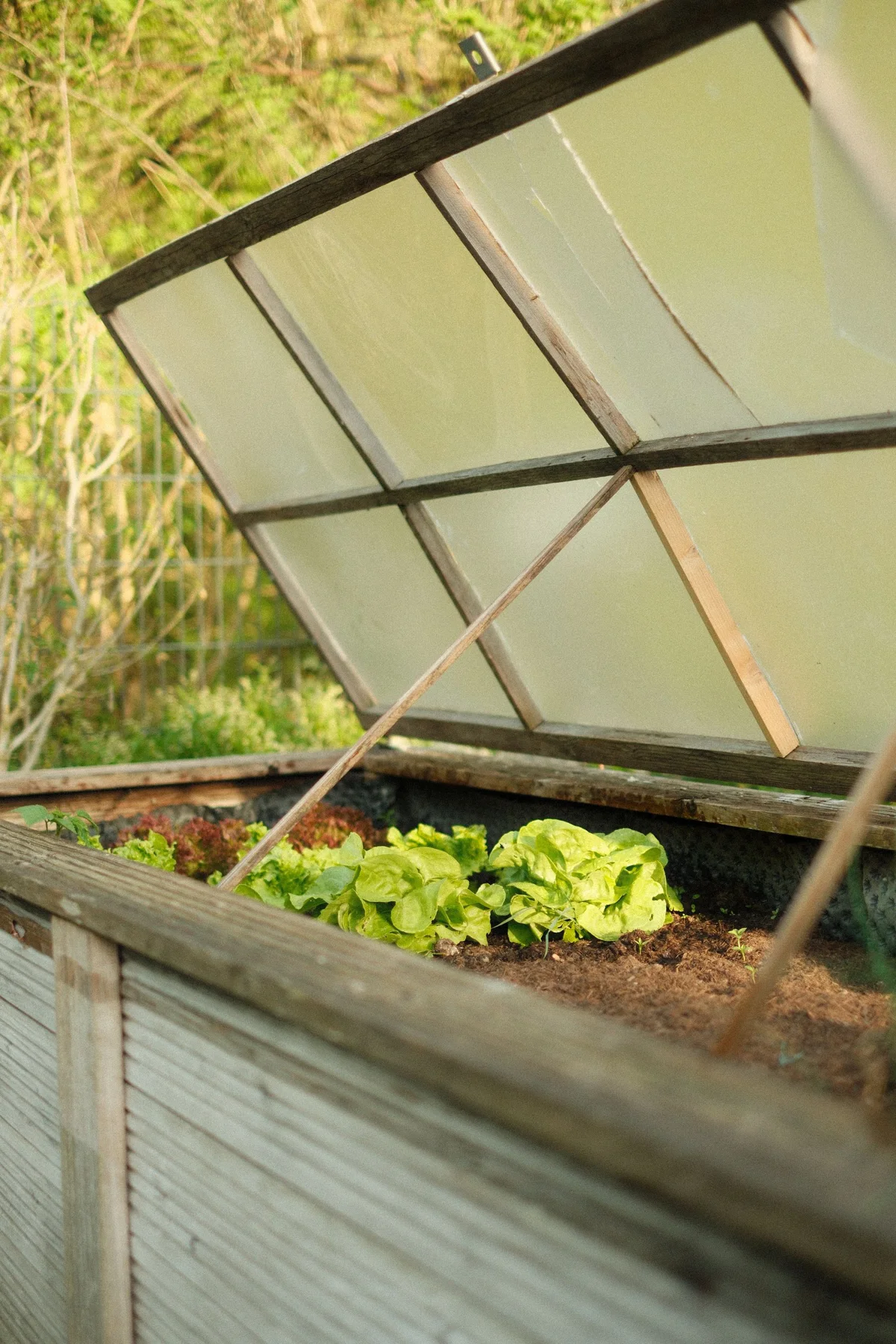
A bed should let you tend the middle without standing on the growing soil. A width around three to four feet often works when both sides are accessible, but your own reach is the better test. A bed against a wall needs to be narrower. Mark the outline on the ground and rehearse reaching it before you build.
Leave paths that work
Allow space for your body, watering equipment, and any mobility aid or wheelbarrow you use. Measure the equipment instead of assuming a narrow gap will be enough. Wet foliage and spreading plants reduce usable path width later. Keep access to valves and drainage routes clear.
Place the largest plants first
Check mature spread and support requirements. Put a trellis where you can harvest from it and where it will not shade crops that need more sun. In many Northern Hemisphere gardens, the north side is a useful starting position for tall plants; verify the actual shade in your own site. Our grid planner is a sketching aid, not a promise that one plant fits in one square.
Do a spacing check
Compare your sketch with the spacing on the seed packet or local growing guide. Keep separate row and in-row distances when required. Space for airflow and reaching a harvest is productive space too. Draw the plant at its mature size rather than as the small transplant you are buying.
Put one idea to work.
Choose one decision from this guide and add it to your garden plan. Our free tool can help with the next step.
Open the planning tool ↗Sources & further reading
These extension resources support the growing principles in this guide. Our examples and planning suggestions are editorial explanations. Local recommendations take priority where conditions differ.
- Colorado State University Extension: Block-style layout in raised beds ↗
- University of Maryland Extension: How to start a vegetable garden ↗
Reviewed September 26, 2026. Read our editorial approach.